
Category:
discussion and comments

December 8, 2025
AI & Its Impact: Navigating the Future of Work, Ethics, and Innovation 🧠
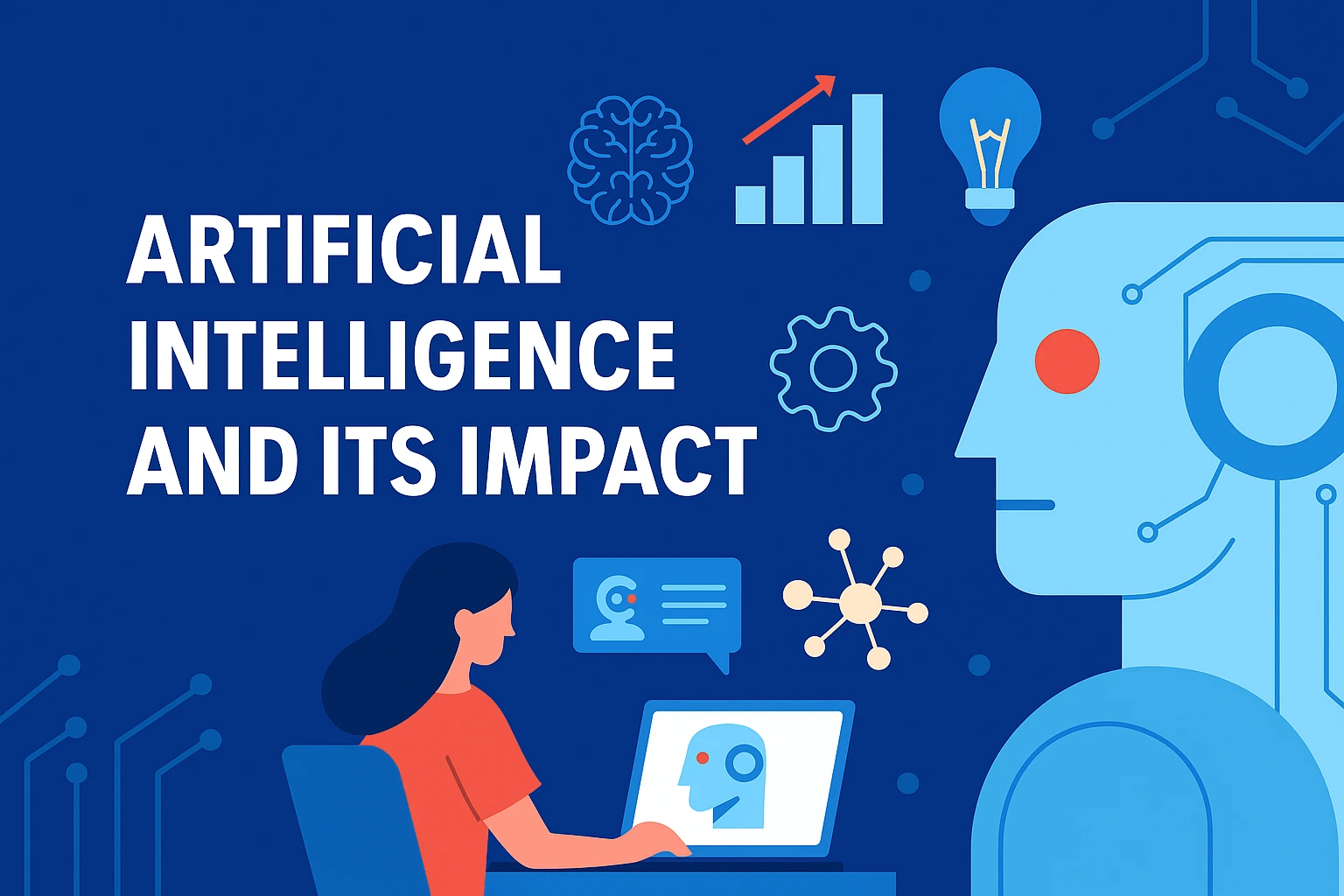
Artificial Intelligence (AI) is no longer confined to the pages of science fiction. It's here, it's evolving at an astonishing pace, and it's fundamentally reshaping nearly every facet of our lives. From the way we work and learn to how we interact with technology and even conceive of human creativity, AI's impact is profound and multifaceted.
This extensive blog post delves deep into the current state of AI, its transformative effects across industries, the critical ethical dilemmas it presents, and what we can expect as this powerful technology continues its inevitable march forward.
What Exactly is AI? A Quick Refresher
At its core, Artificial Intelligence refers to the simulation of human intelligence in machines that are programmed to think like humans and mimic their actions. It encompasses several key sub-fields:
Machine Learning (ML): The ability of systems to learn from data, identify patterns, and make decisions with minimal human intervention. Think recommendation engines or spam filters.
Deep Learning (DL): A subset of ML that uses neural networks with many layers (deep neural networks) to learn from vast amounts of data. This powers image recognition, Natural Language Processing (NLP), and more complex tasks.
Generative AI: The technology currently driving public discourse—models like ChatGPT (for text) and DALL-E (for images)—which can create new content often indistinguishable from human-created work.
AI's Transformative Impact Across Industries
AI is not just optimising existing processes; it's creating entirely new capabilities and business models. Here's a glimpse into its reach:
1. Healthcare: Precision, Prediction, and Personalisation
AI is revolutionising medicine from diagnostics to drug discovery. Machine learning algorithms can analyse vast datasets of patient records, medical images (like X-rays and MRIs), and genetic information to:
Enhance Diagnosis: Detect diseases like cancer earlier and more accurately than human experts in some cases.
Accelerate Drug Discovery: Identify potential drug compounds and predict their efficacy, dramatically reducing research and development timelines.
Personalise Treatment: Tailor treatment plans based on an individual's unique genetic makeup and health data.
2. Finance: Risk, Fraud, and Algorithmic Trading
The financial sector has been an early adopter of AI, leveraging its power for:
Fraud Detection: AI systems can identify subtle patterns indicative of fraudulent transactions in real-time, preventing billions in losses.
Risk Assessment: More accurately assess credit risk and market volatility.
Algorithmic Trading: AI algorithms execute trades at high speed, exploiting market inefficiencies.
3. Creative Industries: Content Generation and Design
Generative AI is a game-changer for content creation. From writing articles and marketing copy to generating images, music, and even video, AI tools are becoming indispensable for designers, marketers, and artists. They accelerate brainstorming, produce prototypes, and even create finished products, raising new questions about creativity and authorship.
The Future of Work: AI as a Colleague, Not Just a Competitor
Perhaps the most discussed impact of AI is on the job market. While concerns about job displacement are valid, a more nuanced view suggests a shift rather than an outright replacement:
Automation of Repetitive Tasks: AI excels at automating mundane, repetitive, and data-intensive tasks, freeing human workers for more complex, creative, and strategic roles.
Job Augmentation: AI tools can enhance human capabilities, acting as powerful assistants for professionals across all sectors.
Creation of New Jobs: New roles such as AI engineers, AI ethicists, data scientists, and prompt engineers are emerging rapidly.
Demand for "Human" Skills: Skills like creativity, critical thinking, emotional intelligence, and complex problem-solving become even more valuable as AI handles the more predictable tasks.
The World Economic Forum predicts that while AI may displace 85 million jobs by 2025, it could also create 97 million new ones, leading to a net positive increase, albeit with significant retraining challenges.
Ethical Dilemmas and Regulatory Challenges
The rapid advancement of AI brings with it a host of profound ethical questions and urgent calls for robust regulation:
1. Bias and Fairness
AI systems learn from the data they're fed. If that data reflects existing societal biases (e.g., racial, gender, socio-economic), the AI will perpetuate and even amplify those biases. This can lead to unfair outcomes in areas like hiring and criminal justice. Bias mitigation is a crucial research area.
2. Privacy and Data Security
AI thrives on vast amounts of data, raising concerns about how personal information is collected, stored, and used. Ensuring data privacy and establishing clear consent mechanisms are paramount, particularly under UK and EU data protection laws.
3. Accountability and Transparency
When an AI makes a harmful mistake, who is responsible? The developer? The user? The "black box" nature of some advanced AI models makes it difficult to understand why they make certain decisions, driving the need for explainable AI (XAI).
4. Regulatory Lag
Governments worldwide are struggling to keep pace. While initiatives like the European Union's AI Act are attempting to create comprehensive legal frameworks, the speed of AI development often outstrips the legislative process, creating a regulatory vacuum.
Navigating the AI Landscape: Strategies for the Future
For Individuals: Upskill and Adapt 🚀
The most effective strategy is continuous learning and upskilling. Focus on developing skills that AI currently struggles with: creativity, emotional intelligence (EQ), and prompt engineering.
For Businesses: Integrate and Transform
Companies that embrace AI early will gain a significant competitive advantage. This involves:
Audit for Augmentation: Identify processes where AI can augment human performance rather than simply replace it.
Invest in Training: Re-tool the existing workforce with AI-literacy training.
Establish Ethical Guidelines: Create internal policies for the responsible use of AI, prioritising fairness and data privacy.
For Governments: Regulate for Innovation and Safety ⚖️
Effective regulation must promote innovation while protecting citizens. Key priorities include:
Risk-Based Regulation: Applying stricter rules to "high-risk" AI applications (e.g., in surveillance or healthcare).
Global Collaboration: Establishing international standards for AI safety and development.
Conclusion: The Defining Technology of Our Time
Artificial Intelligence is not merely a tool; it is a fundamental shift in how human knowledge is stored, processed, and applied. It offers the promise of solving humanity's most complex challenges. Success in the age of AI depends not just on technological advancement, but on our collective ability to address the ethical pitfalls, adapt our skills, and establish thoughtful governance. The time to engage with its reality is now.
Discussion & Comments
We've explored the vast and complex world of AI's impact, from its incredible potential to its significant challenges. Now, we want to hear from you.
What aspect of AI's impact do you find most exciting, or most concerning?
How do you see AI changing your industry or daily life in the next 5-10 years?
What ethical question around AI do you think we must address urgently?
Join the conversation below! Your insights are crucial as we collectively navigate this unprecedented technological era.


.webp)